Artwork
These images are a companion to A Divided Life. AI was my paintbrush to make them, but not the source. My creations became the cover and chapter artwork as they appeared in my mind. I worked from period‑appropriate photos of myself, and photos of some of the actual locations. The process involved careful, specific design prompts, and many, many iterations.
For me, this was less about “illustrating” the story than giving each chapter a visual atmosphere—the way memory often does. I wanted the images to mark the shift from one interior season to the next.
They aren’t answers, and they aren’t instructions. They’re simply what surfaced when I let the chapters be seen as well as read. If you’ve finished the memoir, I hope this page feels like a return to those rooms with the lights on. If you haven’t, consider it a glimpse of atmosphere, not a map. The story stands on its own.
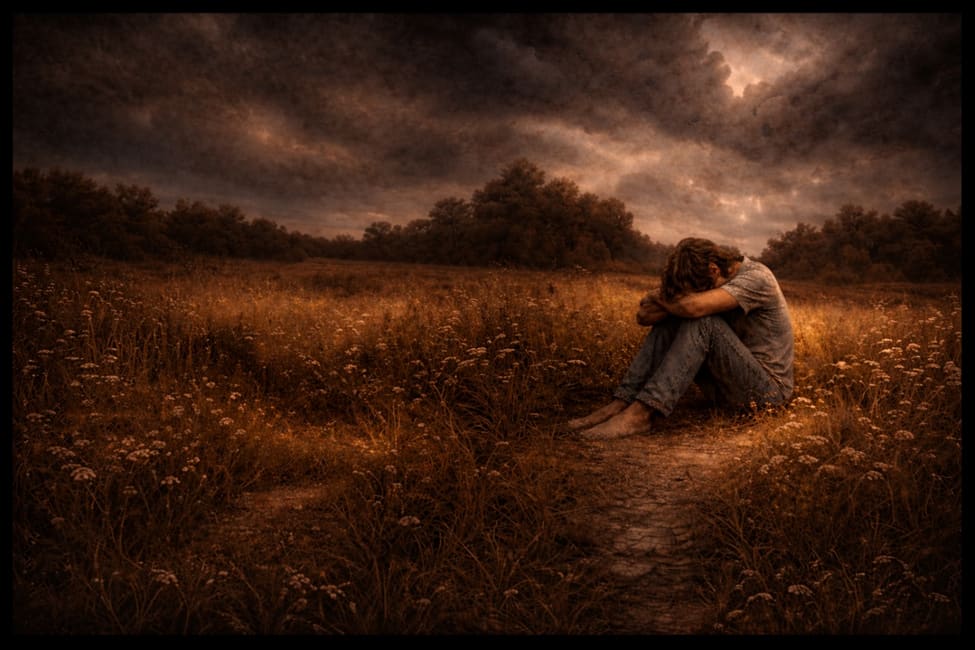
Book Cover – Spine – Back
I wanted the cover to hold the same tension the book does: quiet on the surface, but with storm clouds gathering underneath. This scene never existed anywhere except in my mind. It was how I mentally saw myself during this time of finding myself.
The boy in the field is alone, turned inward, and nearly swallowed by what he cannot yet face. The small bands of sunlight and yellow flowers matter to me—they suggest that even in despair, something living, at my core, remains.
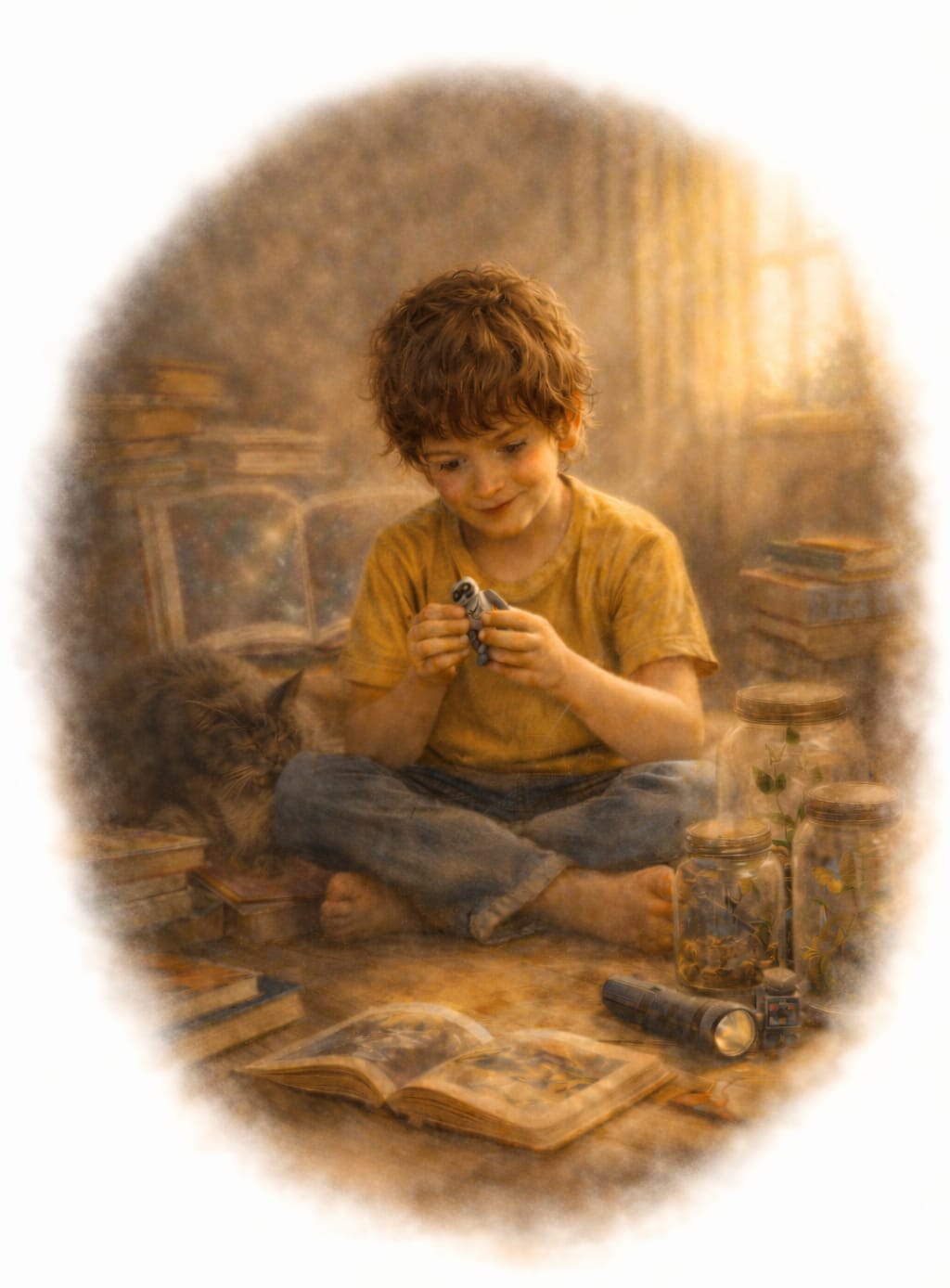
Chapter 1 – Me, Myself, and I
I created this image to return me to the happiest architecture of my childhood: eight years old, messy hair, bare feet, books, terrariums, toys, sunlight, and a cat dozing nearby. This boy is completely at home in his own mind, full of curiosity and content to let his imagination take the lead.
What moves me most about this image is its warmth. What matters to me here is that nothing is guarded yet. The inwardness that would later become refuge and risk is still, at this point, simply joy.
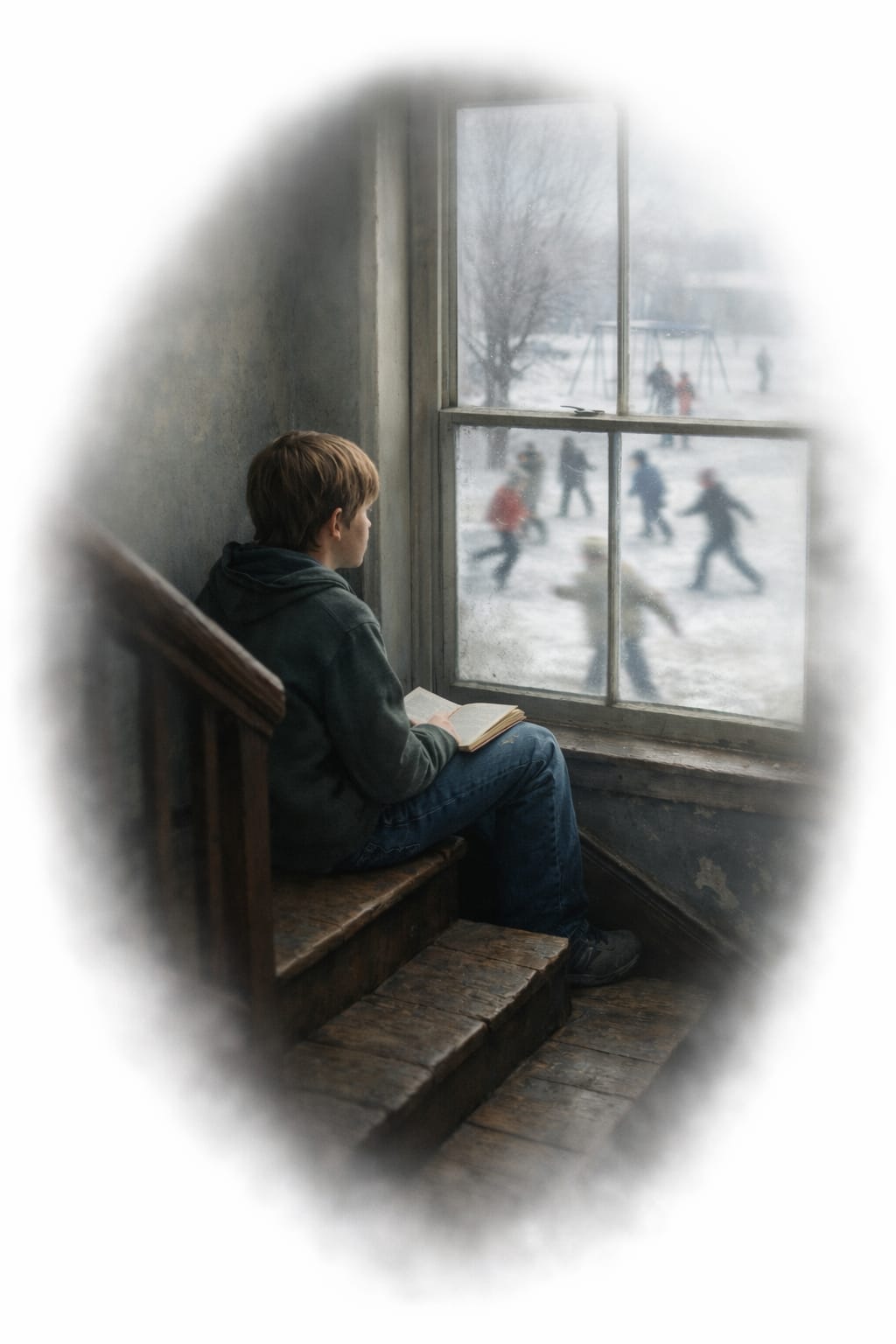
Chapter 2 – Becoming Invisible
I created this image to place twelve-year-old me on the old wooden stairway of my middle school, book in hand, watching the other kids through the winter light outside the window. The warmth of the first chapter is gone, replaced by something more institutional and contained.
What stays with me most is the feeling of looking toward a world I wanted to join, while already learning how to remain apart from it by hiding in plain sight. This is where solitude begins to turn into strategy, and invisibility starts to feel like protection.
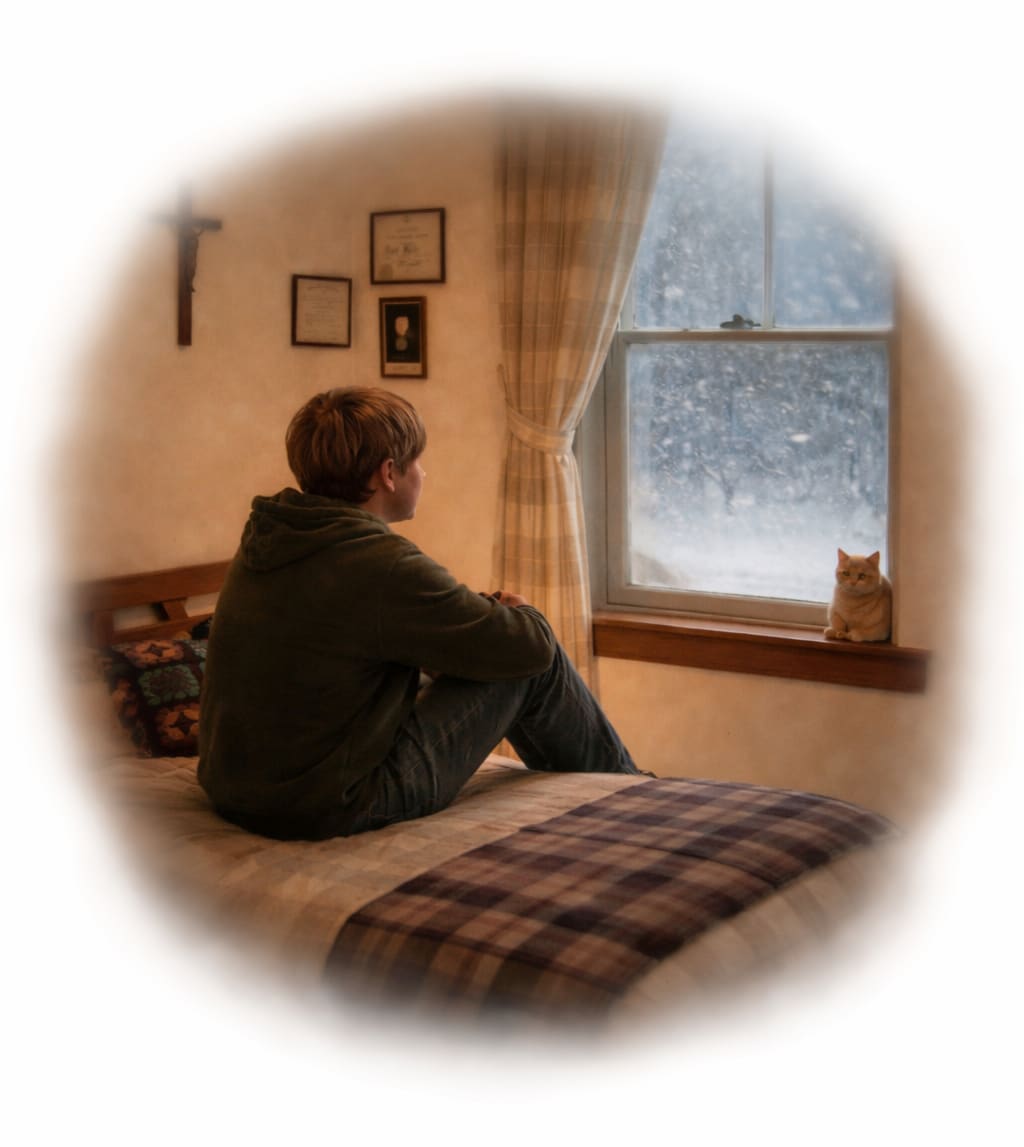
Chapter 3 – Waiting for Change
I created this image to return me to the careful order of my bedroom: the made bed, the crucifix, the school awards, the warm lamplight, and the snowstorm moving outside the window. I wanted the pose to echo the despair that comes later without fully arriving there yet. This is a chapter of waiting at age thirteen—of looking outward while thoughts turn inward, and of hoping that time might resolve what I could not yet understand.
The room still holds warmth, but the weather beyond the glass already carries the confusion gathering inside me.
Chapter 4 – Is it just me?
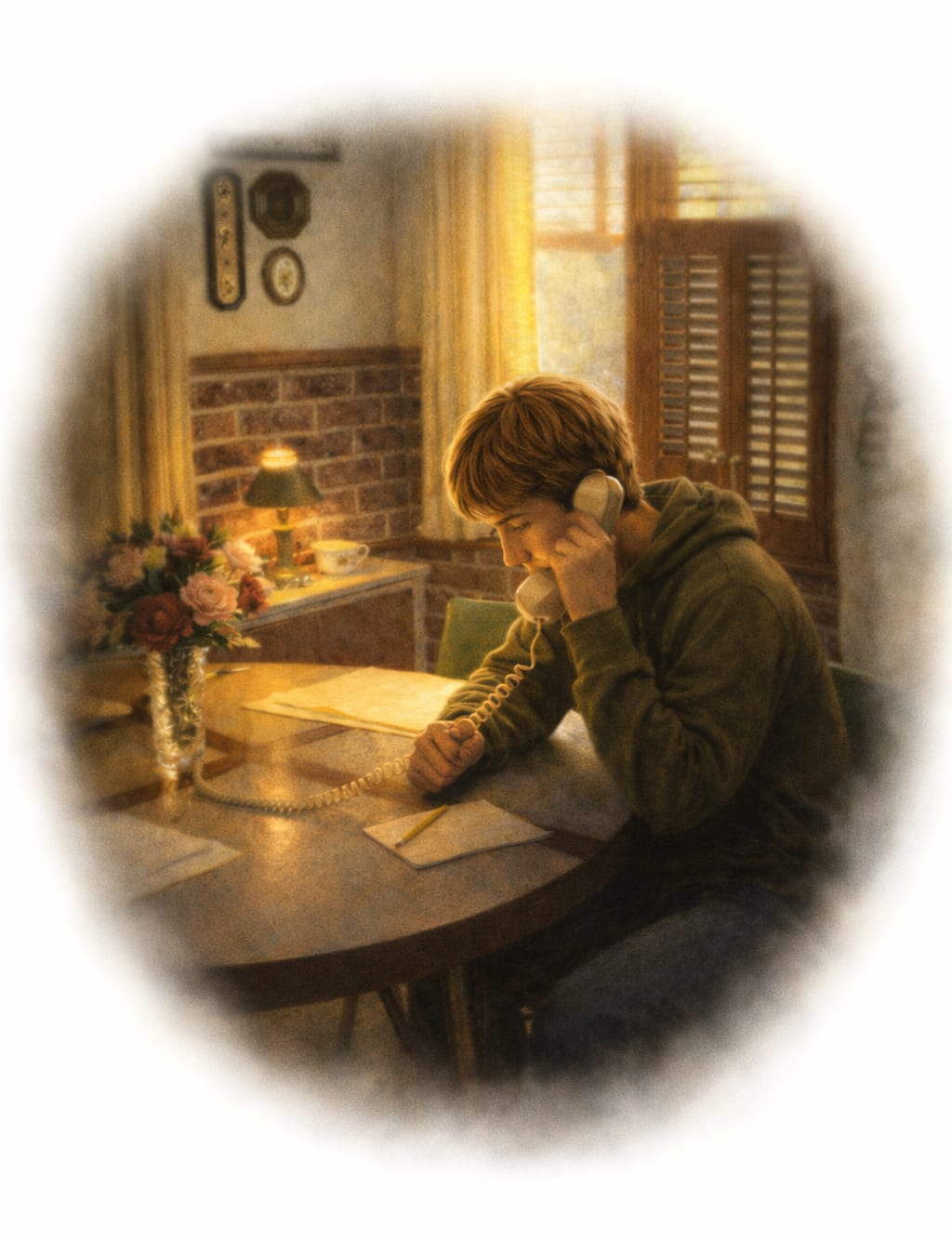
This is the question I carried at age fifteen—trying to decide whether I was different, defective, or simply weird. All I wanted was to understand why my reality was so confusing.
I created this image to hold the warmth and hope of that moment : seated at the kitchen table, alone in the house, sunlight coming through the shutters, talking on the phone to a gay hotline and beginning to believe that I was not alone. There is still uncertainty here, but also the first widening of possibility—the beginning of realizing I was not uniquely broken, even if I still could not make sense of what being gay meant beyond the name itself.
Chapter 5 – Apparently, I’m Evil
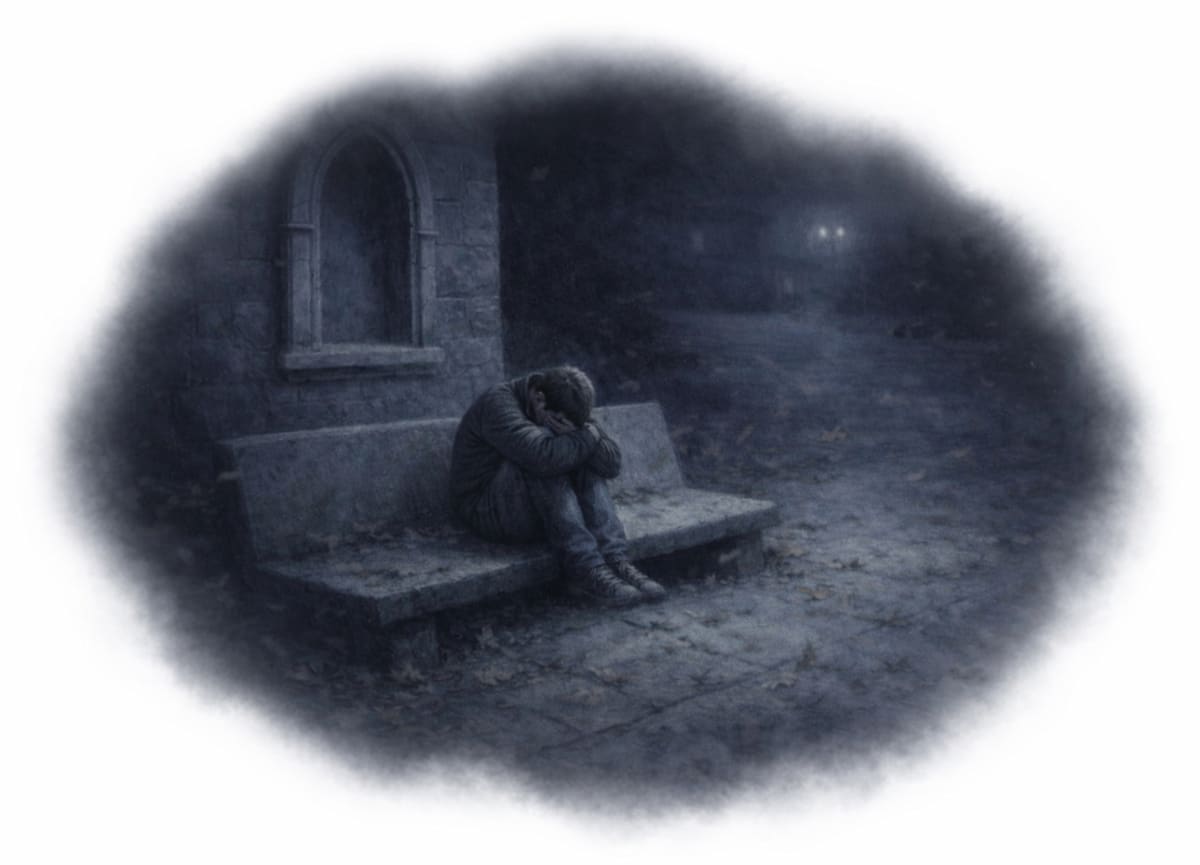
I wanted this image to feel severe, cold, and morally charged. It places the seventeen-year-old me back in the actual courtyard from the book, hunched over on the bench with the empty niche behind me and the color drained down to grays and shadow.
This is the chapter where judgment stops being abstract and begins to settle over my reality like weather. Fear is no longer just social discomfort; it starts to feel sanctioned and absolute. Judgment had found words, and I had to learn how to live with a shame I did not yet understand.
Chapter 6 – Hiding from Myself
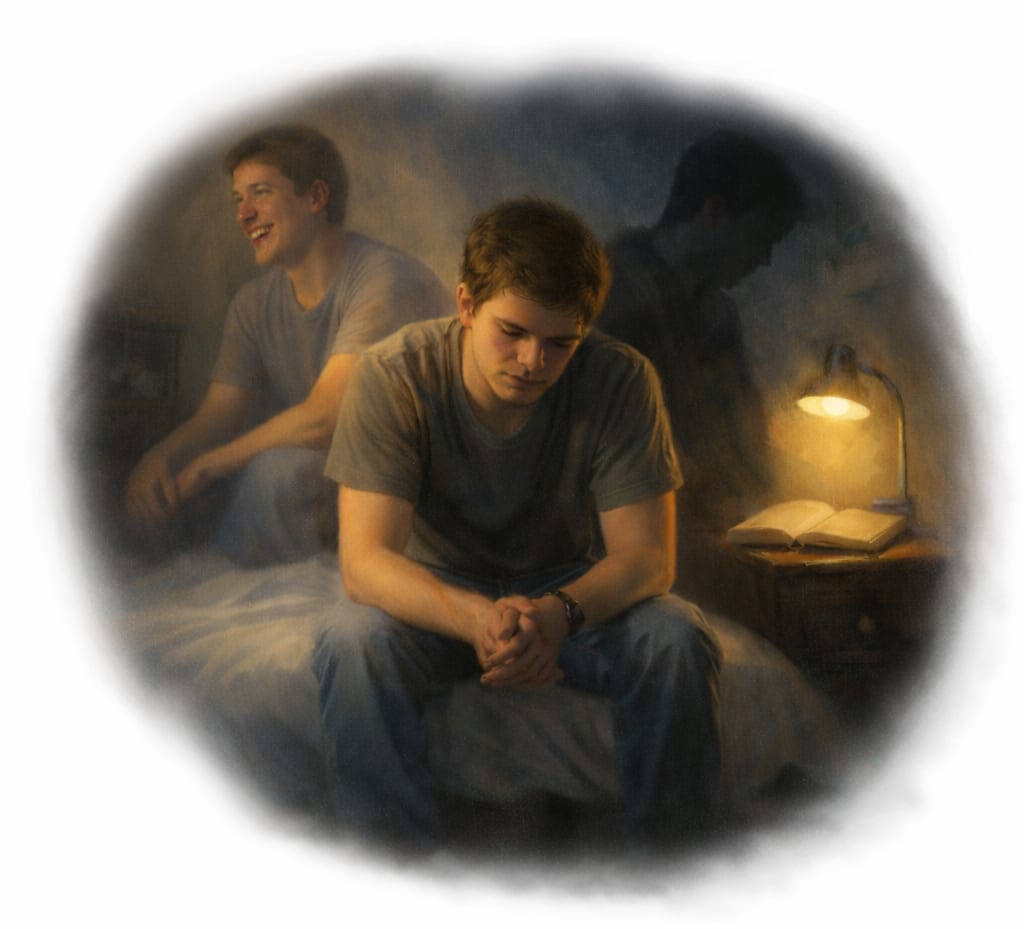
I created this image to make the division of hiding from myself visible. My room is mostly lost to darkness now, with only the edge of the bed, a small table, and the reading lamp still holding shape. At the center sits the seventeen-year-old version of me I thought of as “good”— sad, controlled, and trying to remain acceptable. Beside him, another self laughs more freely, as if he belongs to a different world altogether, one where he appeared “fine.” On the other side is only a dark outline, present but unreadable and visible to no one except me. He was my "Gay Monster" — always present in the darkness of my mind.
This is where concealment stops being merely outward and becomes an internal structure: not just a single hidden self, but different parts of the same self being made to live separately, even while all of them still belong to the same life. This was my divided life.
Chapter 7 – The Curve Ball
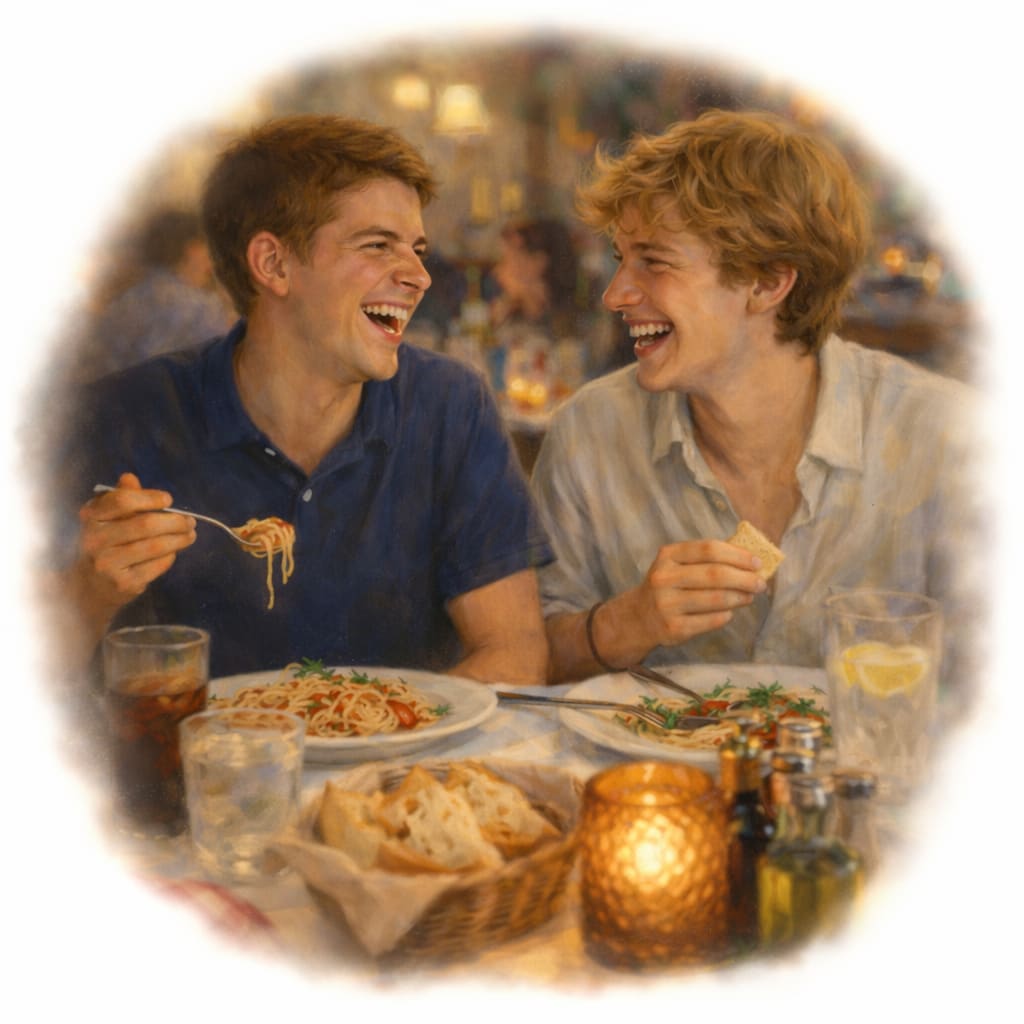
I created this image to hold the warmth, humor, and ordinary happiness of that moment: Ted and me side by side in the Old Spaghetti Warehouse, laughing too hard to keep eating. The closeness is intentional—close enough to brush shoulders, which was its own quiet kind of hand-holding for us.
What matters most to me here is how normal it felt. The curve ball in this chapter is that joy suddenly becomes possible, and with it the unsettling realization that my reality might include something beautiful and real that neither of us had planned for—and did not yet know how to make a lasting part of our lives.
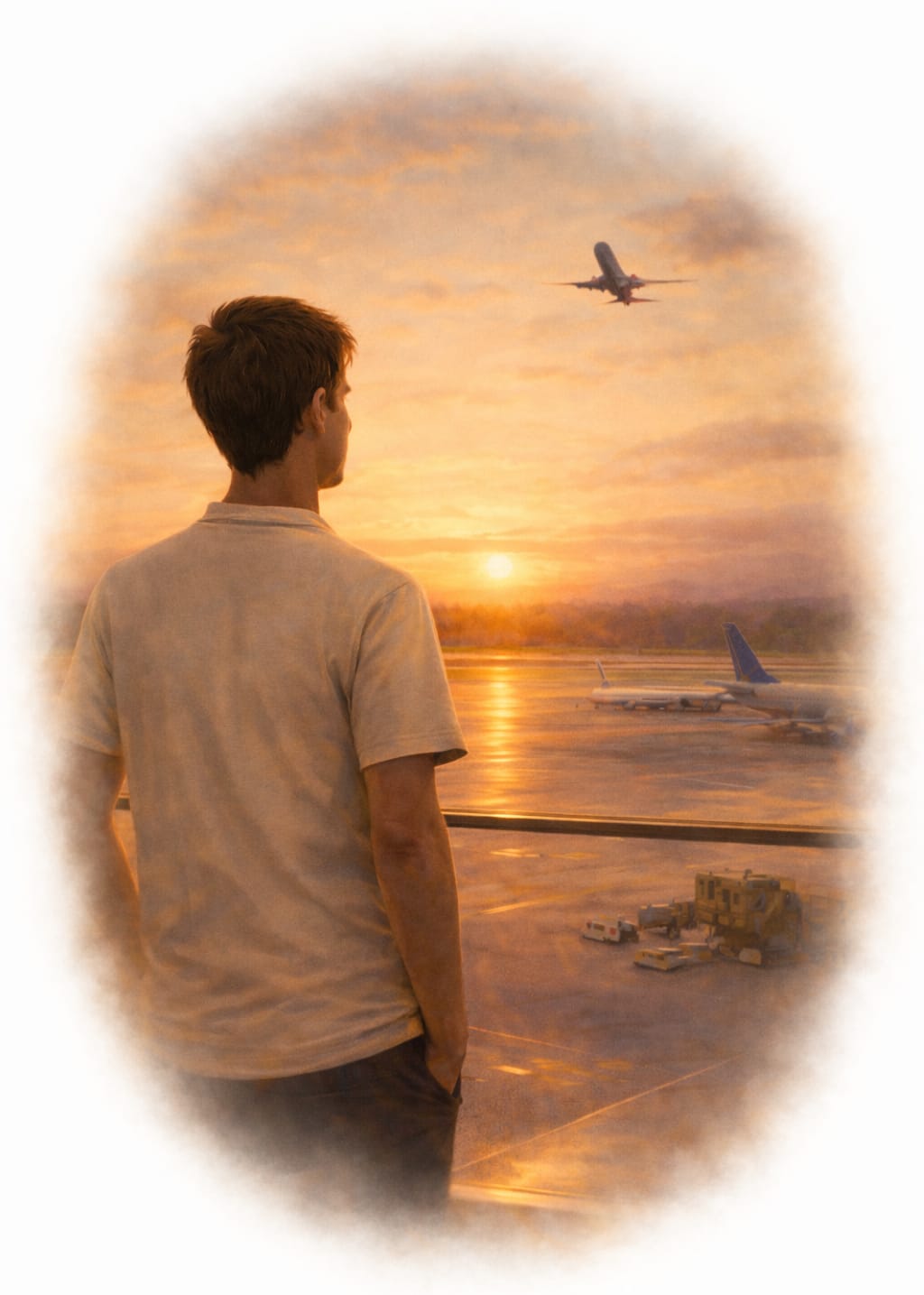
Chapter 8 – Endings
Some endings don’t arrive with closure. They just leave you holding the space where something real used to be—and hoping it isn’t lost forever.
I created this image to hold the emptiness of that departure: standing at the airport window, watching the plane rise into the orange light of the sunset and knowing my best friend Andy was leaving my everyday life. You only see me from behind, but the despondency is clear.
This chapter is not about closure. It is about absence—the kind that leaves you standing still while the thing you cannot keep disappears from sight.
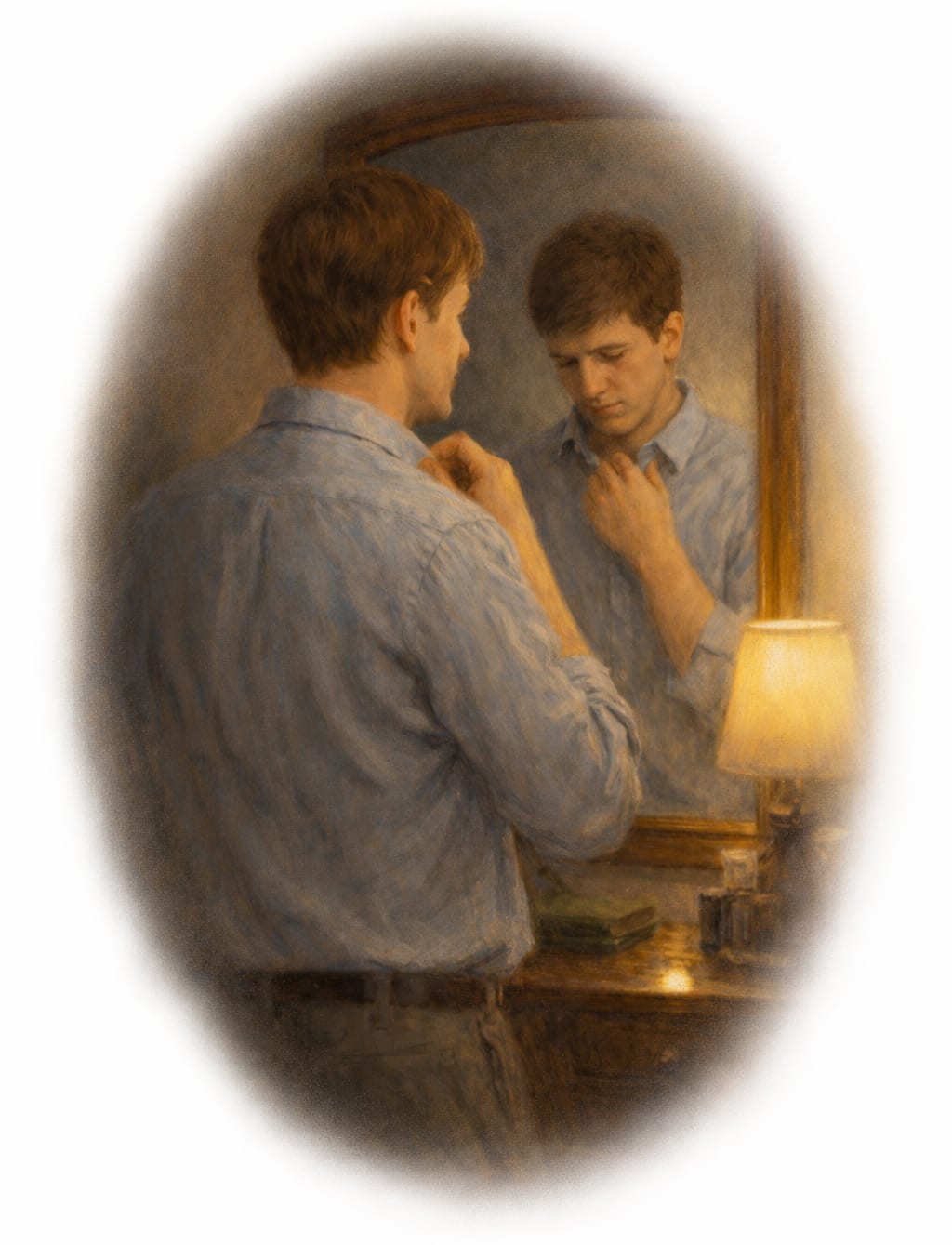
Chapter 9 – Lying to Myself
I created this image to hold the false coherence of that period for my nineteen-year-old self: standing before the mirror, adjusting my collar, trying to make “normal” look natural.
The warm light and familiar wood of the dresser matter to me because they create a small pocket of reality that feels almost convincing. But the reflection does not quite match—intentionally. Its head is bowed, its gesture is different, and it carries the weariness of a self that already knows the performance is false.
This is where normal becomes a project—and where the cost of maintaining that false reality begins to show.
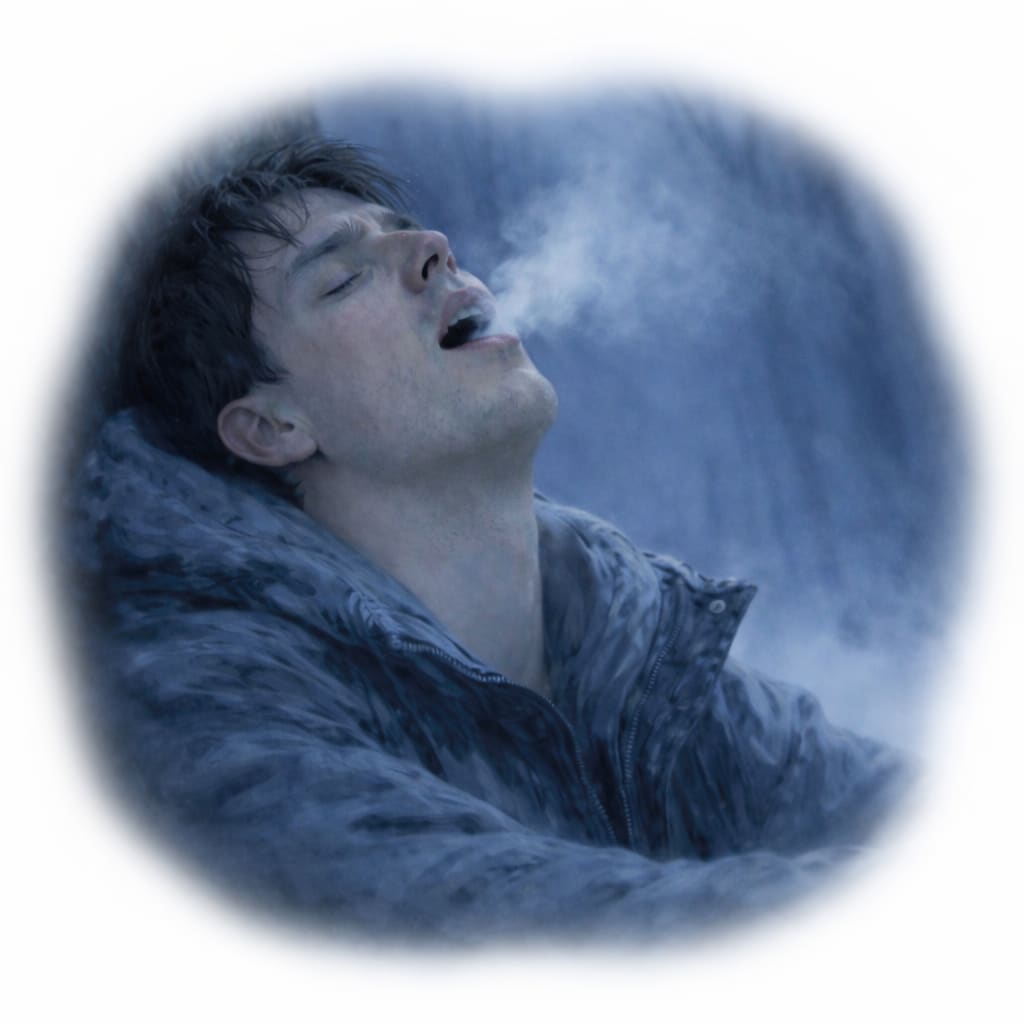
Chapter 10 – Cold Reality
I created this image to feel as exposed and stripped down as that moment was: seated in the snow, back against the tree, breath visible in the night air, no longer wanting to live.
By this point, the systems that once kept life manageable are failing, and there is no longer enough false structure left to hold my reality together. There is only cold, the dark sky, and the end of anything I can still pretend is livable.
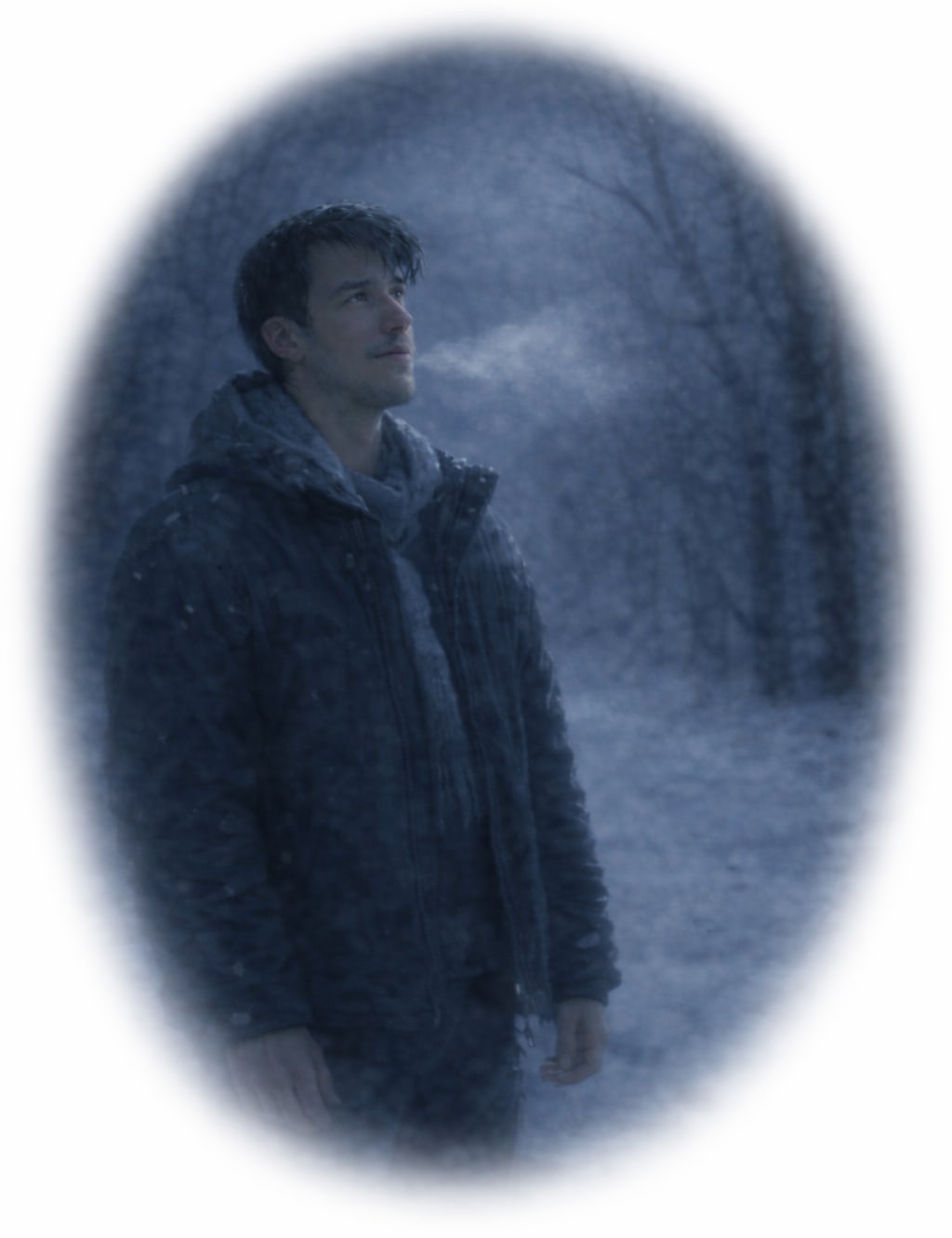
Chapter 11 – Never Surrender
I created this image from the same cold scene as Chapter 10, but everything important has changed.
The night, the snow, the tree, and the visible breath are all still there, yet the figure is no longer collapsed against them. The coat is open, the eyes are open, and the body, now standing, has turned toward something not yet known. This is not triumph, and it is not certainty. It is the moment when I no longer needed all the answers in order to keep going.
Hope enters quietly here—not as revelation, but as the refusal to reshape my reality to fit one prescribed by others.

Chapter 12 – Living Life Whole
This is where the long proof lives: a life built in ordinary days, where fear still exists but no longer gets to run the show.
I wanted this final image to feel quieter and more settled than the ones before it. Wholeness in the book is not dramatic. For me, it looks like an ordinary life (with my coffee and a lot of cream) that no longer has to be lived in separate, divided pieces.